Pricing a recumbent trike, and the second invoice nobody quotes you
Sunny Nine Thirty-Nine- Subject
- Choosing, fitting and buying recumbent cycles, including three-wheeled tadpole and delta trikes and two-wheel recumbents, for adult road and path riding
- Editor
- The Sunny Nine Thirty-Nine team
- Subject
- Choosing, fitting and buying recumbent cycles, including three-wheeled tadpole and delta trikes and two-wheel recumbents, for adult road and path riding
The cheapest widely sold tadpoles use welded aluminium frames, rigid rear ends and mechanical disc brakes. Treat that specification as the yardstick every other quote should be measured against.
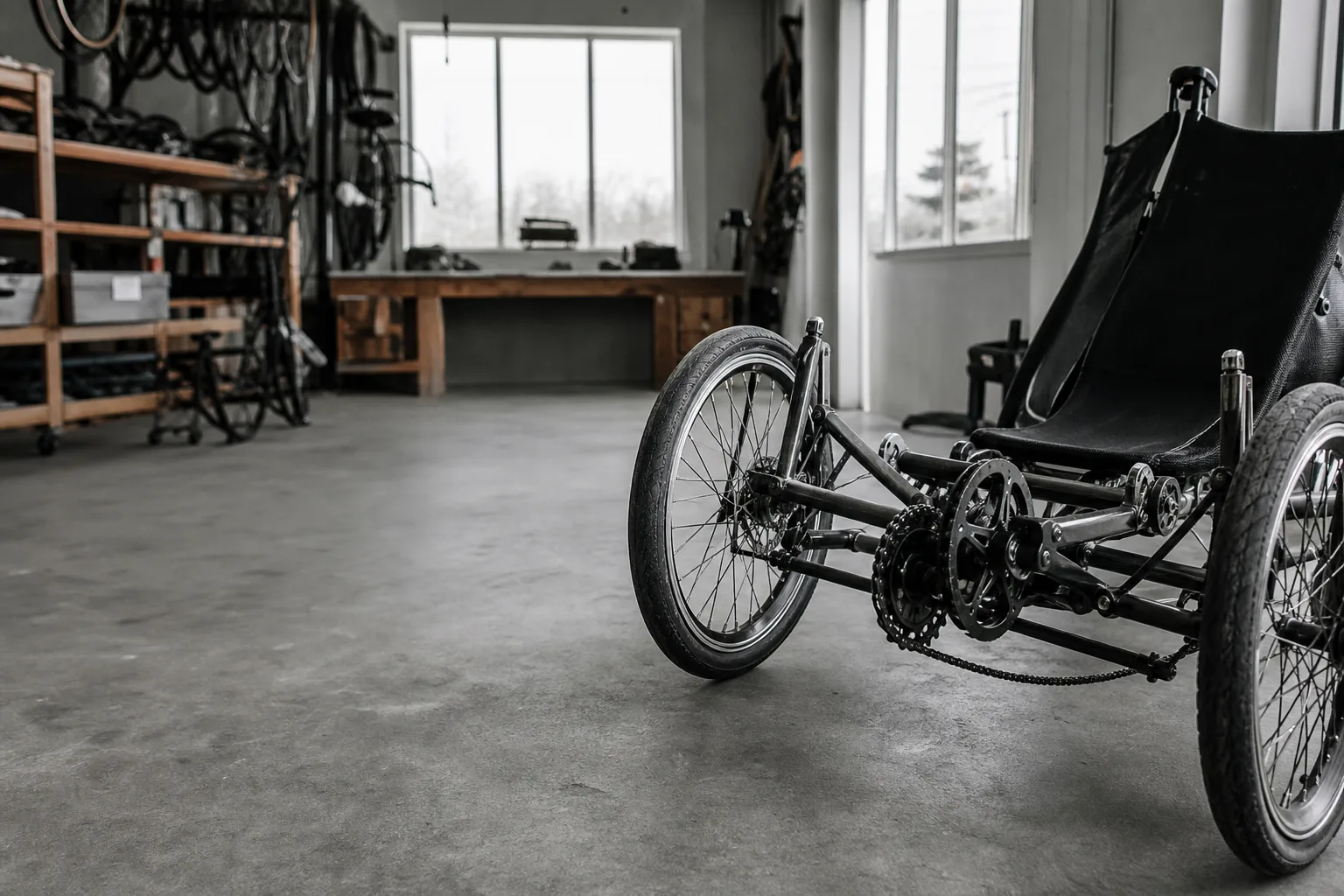
The sticker on a recumbent trike buys a frame, a seat, three wheels and a drivetrain, and almost nothing else you will end up needing. Every rider who has gone through the process describes the same two-stage spend: the machine, then a second round of purchases that arrive over the first two months and are rarely mentioned during a test ride. Knowing the shape of both numbers before you put money down changes which model you should be looking at, because a cheaper trike with an expensive accessory list can land higher than a better one that came equipped.
1. The price bands track frame construction, not brand prestige
At the entry end sit welded aluminium tadpoles with rigid rear ends, direct steering, mechanical disc brakes and mid-tier derailleur groups, and they are the reference point every other price should be measured against. The next step up buys better wheels, sealed bearings, an internally geared or wide-range drivetrain, and a seat with real mesh tension rather than a foam pad. Above that, two features drive cost hard: rear or full suspension, and a folding or separable frame. Each one adds pivots, hardware and machining, so a folding suspension model can sit at a multiple of the entry price rather than a small premium.
2. A used trike hides its wear in five places
Used listings are thin on the ground and move fast, which pushes buyers into hurried decisions, so decide your inspection points before you drive anywhere. Check the chain and both idlers first, because a long recumbent chain wears fast and a grooved idler wheel signals a neglected drivetrain. Look at the rear derailleur hanger for a bend, the front wheel bearings for play with the wheel rocked side to side, and the seat mesh and its fasteners for sun damage. Then check that the boom clamp shows no cracks or crushed tubing, and that the kingpin bolts are torqued and not weeping grease.
3. Ask what the trike is missing before you ask what it costs
Almost every rider buys the same set of additions within weeks: a mast and flag for visibility, at least one mirror and usually two, a rear rack sized for the specific frame, a bright rear light, a mount for a phone or computer, and a bottle cage that works lying back. Some trikes ship with a flag and a rack; some ship with neither and use proprietary mounts that rule out generic parts. The Consumer Product Safety Commission is responsible for bicycle safety requirements in the United States, but visibility hardware on a low frame is a rider decision, and it is a real line item.
4. Measure the trike against your door, not your garage
A tadpole trike is commonly around eighty inches long and thirty inches wide across the front track, which clears most garage doors and defeats a lot of apartment hallways, basement stairs and closets. Take a tape measure to the narrowest point on the route between the street and where the trike will live, including the diagonal through a doorway, and write the number down before you shop. Folding models exist precisely to solve this, and they solve it well, but you pay for the hinges. Standing a trike on its rear wheel against a wall is the free version of the same fix.
5. Transport is a purchase decision, not an afterthought
A trike will not go on a standard hitch bike rack or a roof bar without either a dedicated carrier, a hitch platform rated for the weight and width, or a vehicle with a flat load floor and folding rear seats. Check that a wagon, minivan or SUV swallows the trike with the front wheels on, since removing them each trip gets old quickly. Trikes with a quick-release boom or a folding frame make this easy, and that convenience is worth counting toward the purchase price rather than treating it as a separate problem to solve later.
The useful exercise is to price two or three candidates fully equipped, including whatever rack or carrier the vehicle needs, and compare those totals instead of the numbers on the tags. Done that way, a well-specified mid-range trike often lands close to an entry model that needs everything, and the folding frame that looked expensive starts to look like the storage solution it actually is.